A clean, chemical-free process that transforms agricultural byproducts into export-grade tableware — in under 24 hours from raw material to finished product.
01
Ethical Harvest
Naturally fallen areca sheaths and post-mill bagasse fibre are collected from farmers.
02
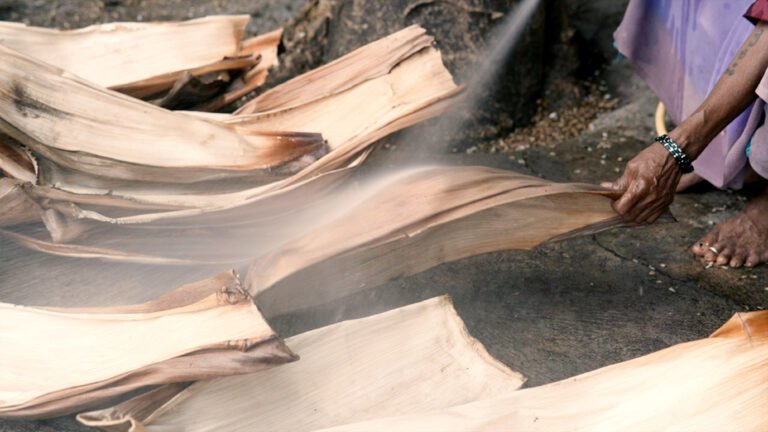
Cleaning & Sorting
Raw material is cleaned with water only - no bleach, no chemicals. Sorted by grade for consistent thickness and colour.
03
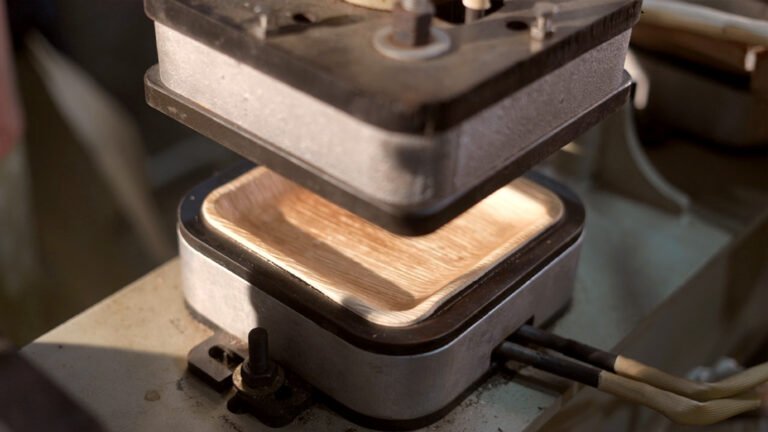
Heat Pressing
Hydraulic heat presses from each piece at precise temperatures. Natural lignins bind the material - zero adhesives needed.
04
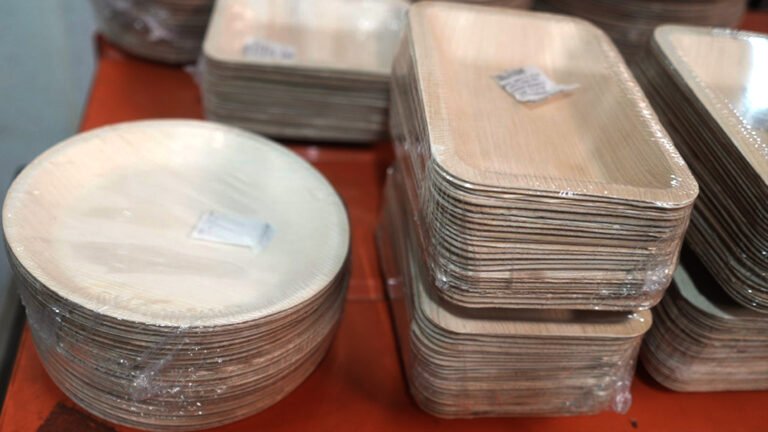
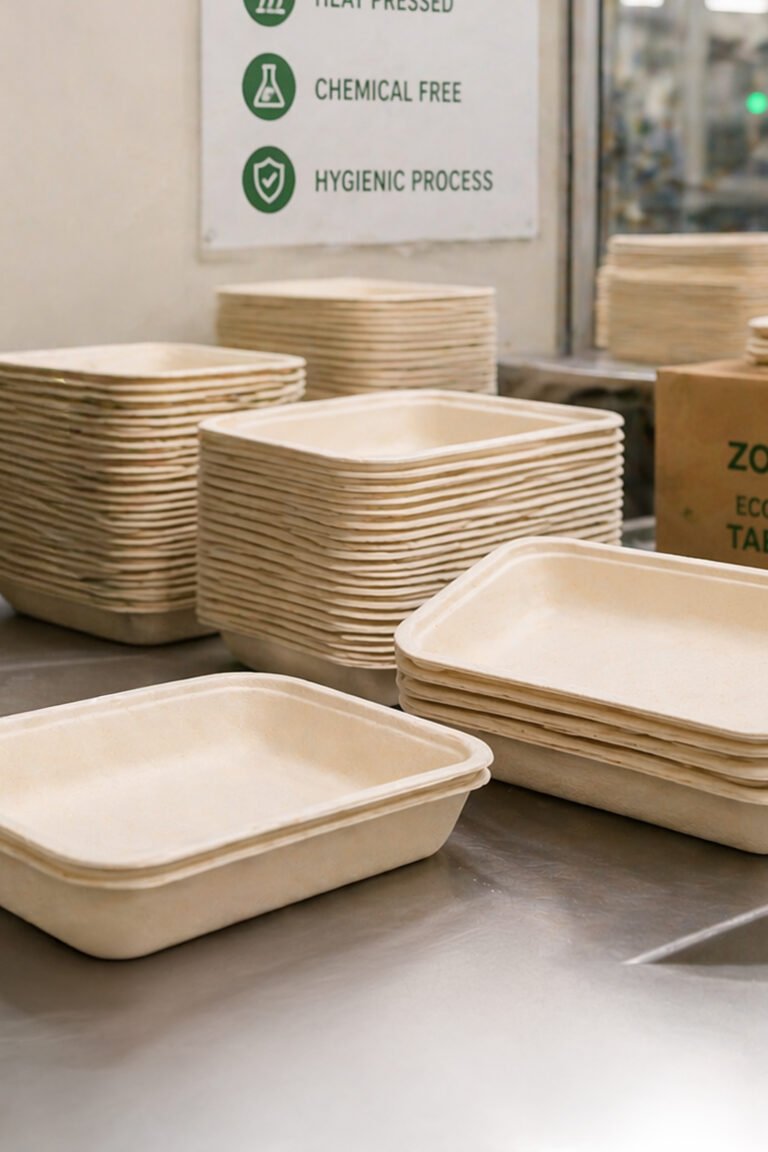
QC & Export Pack
Lab tested for food safety and structural integrity. Packed in recyclable export cartons with full compliance documentation.
How It's Made
From Nature to Table in 6 Steps
A clean, chemical-free process that transforms agricultural byproducts into export-grade tableware — in under 24 hours from raw material to finished product.
STEP 1 OF 6
Collection
Naturally fallen areca palm leaves are collected from plantations and prepared for processing without harming trees.
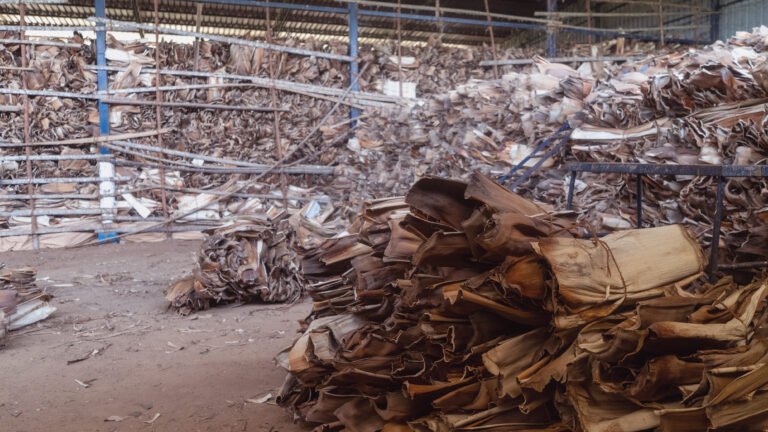
Naturally fallen leaves only
No tree cutting involved
Sustainably sourced from plantations
STEP 2 OF 6
Cleaning
The collected leaves are thoroughly washed with water to remove dust, stains, and natural impurities.
Water-cleaned process
Hygienic preparation
Chemical-free cleaning
STEP 3 OF 6
Sorting
Leaves are carefully sorted based on size, texture, strength, and overall quality before moulding.
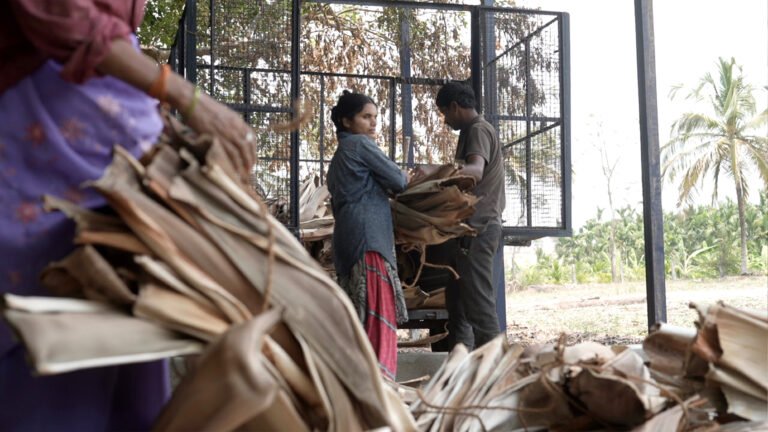
Quality-based selection
Texture & size grading
Consistent product standards
STEP 4 OF 6
Heat Press
The leaves are heat-pressed under high temperature and pressure to create durable tableware shapes naturally.
Heat & pressure moulding
No chemicals used
Strong natural finish
STEP 5 OF 6
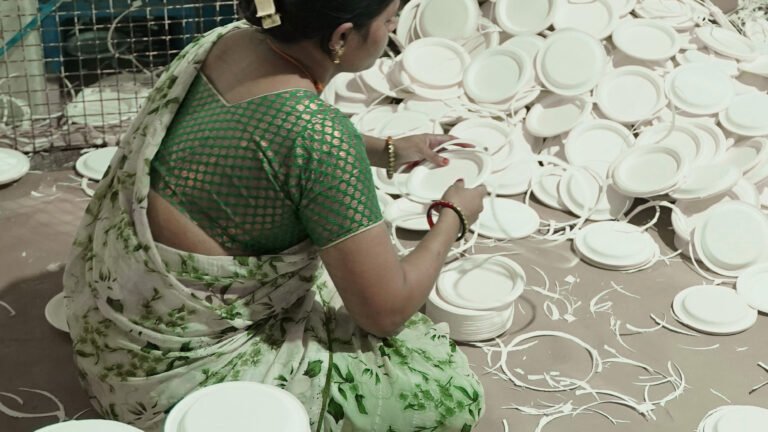
Finishing
Products are trimmed and refined to achieve smooth edges, better usability, and premium presentation.
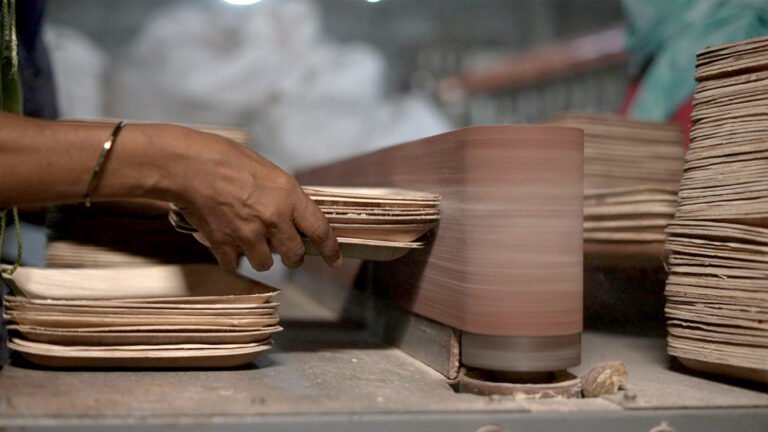
Smooth edge finishing
Refined product shape
Food-safe finishing process
STEP 6 OF 6
Ready to Use
The finished products are packed and prepared for food service, catering, takeaway, and export distribution.
Bulk packaging ready
Durable & lightweight
Hospitality & export friendly
STEP 1 OF 6
Raw Material
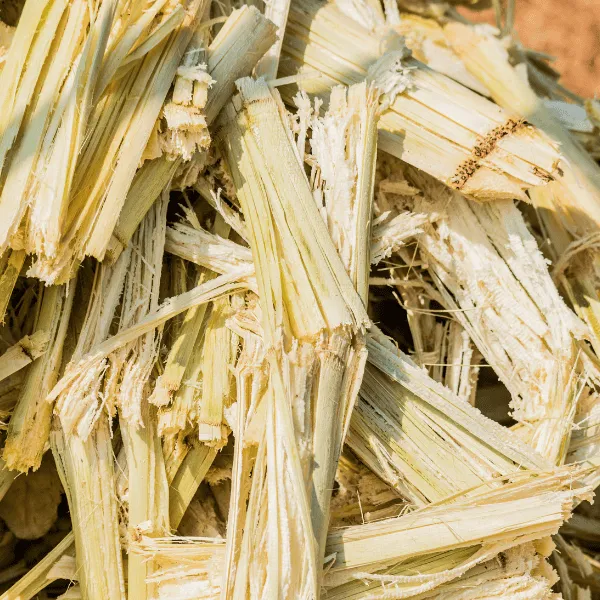
Sugarcane bagasse is collected as a natural byproduct after extracting juice during sugar production.
Agricultural waste utilisation
Sustainable raw material source
Eco-friendly fibre collection
STEP 2 OF 6
Pulping
The collected bagasse fibres are cleaned and processed into natural pulp suitable for moulding.
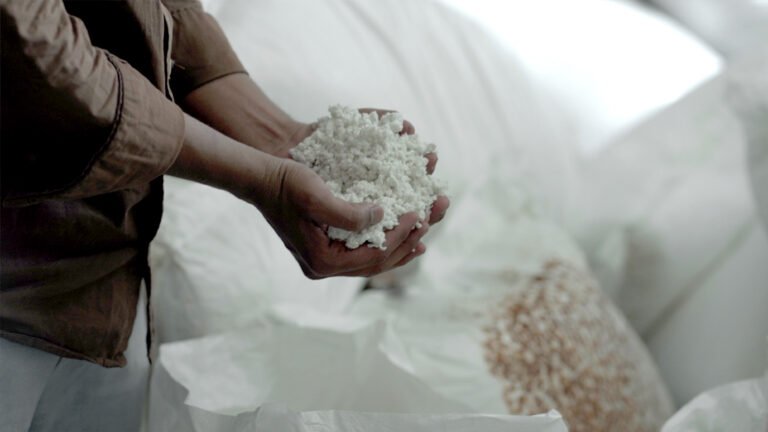
Fibre cleaning process
Natural pulp preparation
Food-safe material processing
STEP 3 OF 6
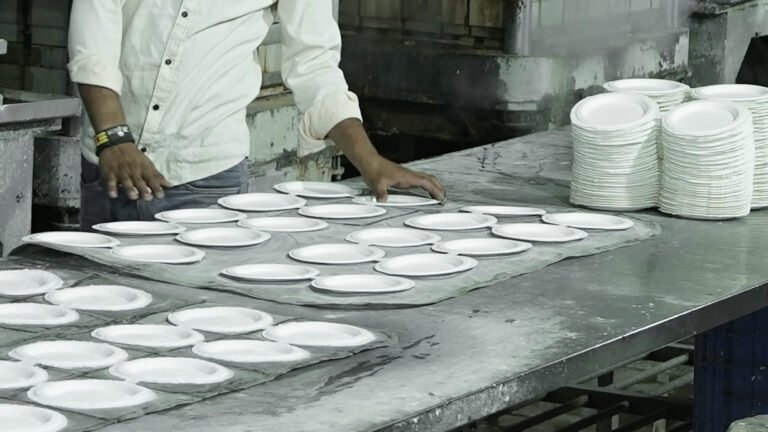
Moulding
Prepared pulp is shaped into plates, bowls, trays, and containers using precision moulding systems.
High-pressure moulding
Consistent product shaping
Lightweight durable structure
STEP 4 OF 6
Heat Press
Products are compressed under controlled heat and pressure to improve strength and durability.
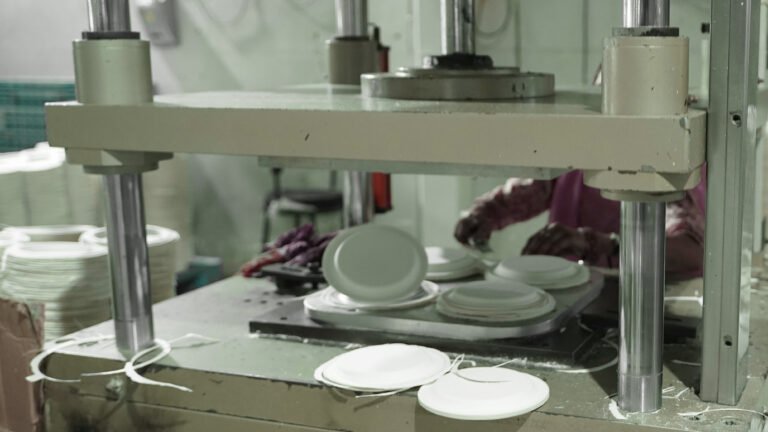
Heat compression process
Enhanced product strength
Durable structural finish
STEP 5 OF 6
Finishing
Edges are trimmed and products are refined to achieve a smooth and ready-to-use finish.
Smooth edge finishing
Refined surface texture
Hygienic product preparation
STEP 6 OF 6
Ready to Use
Finished products are packed and prepared for hospitality, takeaway, retail, and export distribution.